USA
Nature and People First America, LLC
405 Waltham Street
Lexington, MA 02421

Pumped storage hydropower (PSH) technology is a type of utility-scale clean energy storage (battery) invented over 100 years ago to store electricity. The International Hydropower Association says PSH represents 94% of all energy storage solutions deployed globally. 43 PSH sites have been in operation in the USA since the 1970’s and 1980’s with a capacity of over 19 GW. The technology is ideal for storing renewable energy and is the low-cost and clean technology to store electricity for 10 hours or more when the sun doesn’t shine or when the wind doesn’t blow.
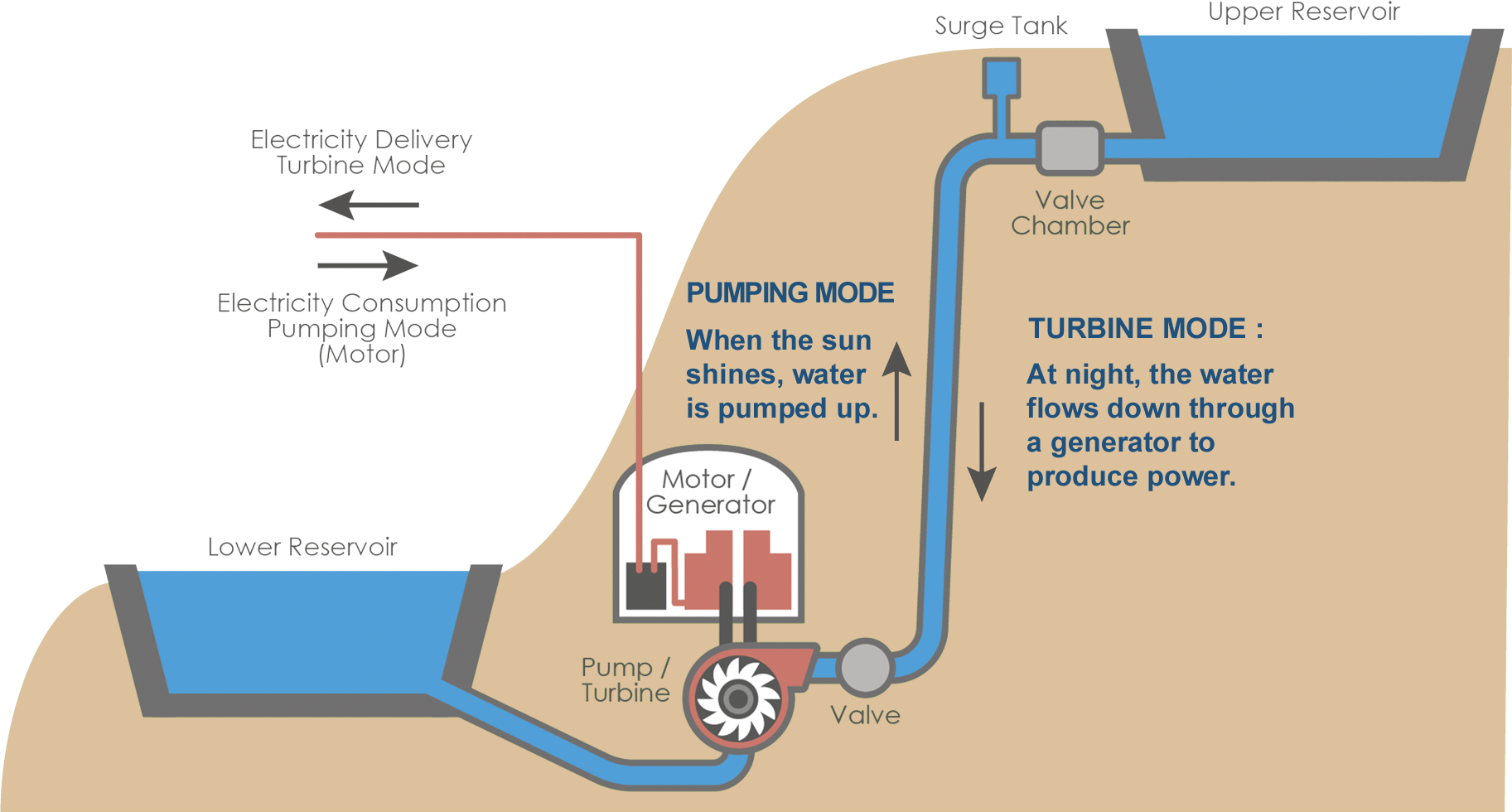
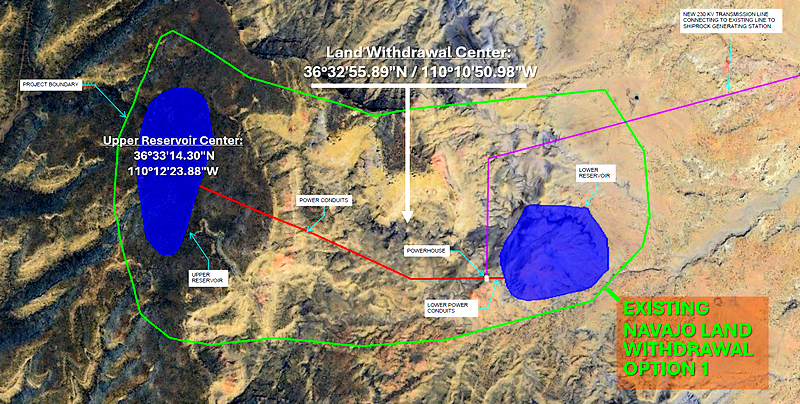
The infrastructure consists of two clean water reservoirs that can hold water separated by natural elevation change. The Chilchinbeto Pumped Storage Hydropower Project has about 1,500 feet of elevation change with one reservoir on Black Mesa and the other reservoir at the base of Black Mesa. The reservoirs are connected by a pipe, also referred to as a tunnel or penstock. When electricity is stored - typically in Arizona when the sun shines and electricity is more affordable - water is pumped from the reservoir at the base of the mesa to the reservoir at the top of the mesa. When electricity is needed, the PSH operates as a hydroelectric facility: water flows down the pipe from the upper reservoir, through a generator producing electricity, and then to the lower reservoir.
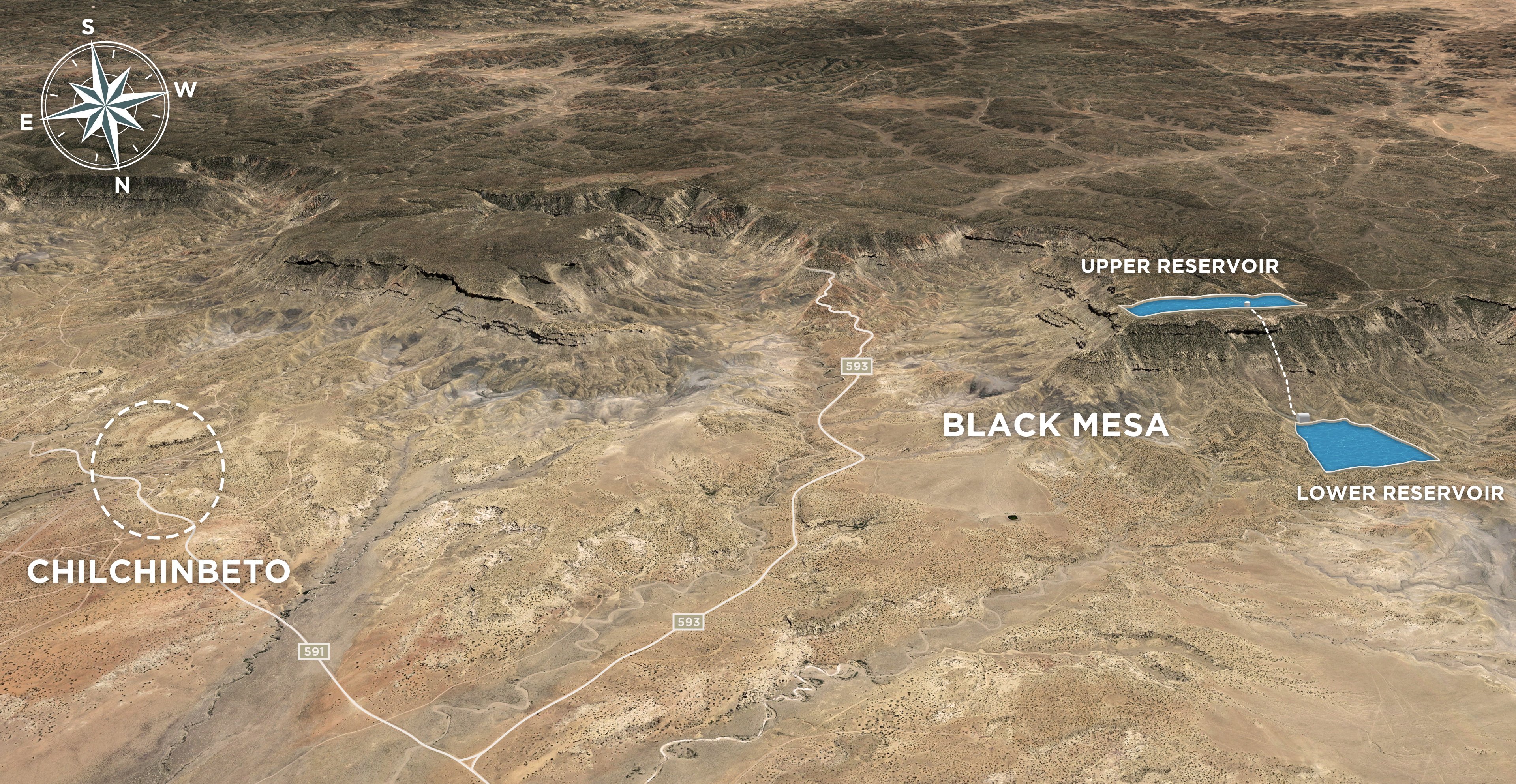
The Chilchinbeto Pumped Hydropower Storage Project is a closed-loop project, so water moves from the base of the mesa to the top of the mesa and then back down to the base of the mesa repeatedly. After construction, the only water needed will be to replace water that evaporates. The project will be designed to minimize evaporation by installing floating solar panels or other methods. Importantly, once the project is constructed, the water infrastructure will be available for use at cost by the community for grazing, farming, or other needs.
In summary, pumped storage hydropower (PSH) is a proven technology and ideal to complement renewable energy sources such as solar and wind power. PSH is a USA-made water-based battery that you can cycle over and over again with little to no degradation over decades. The Chilchinbeto Pumped Storage Hydropower Project will not only help the region’s transition to clean energy but also provide water infrastructure to the Navajo Nation and many jobs to the local community.
In parallel, the Chilchinbeto Chapter expressed interest in learning more about a potential project and offered opportunities for its leadership, members and grazing permittees to attend presentations. The Chilchinbeto Chapter first voted to start a dialogue with Nature and People First and then voted to support the project. The Chilchinbeto Chapter interest in the project is described below.
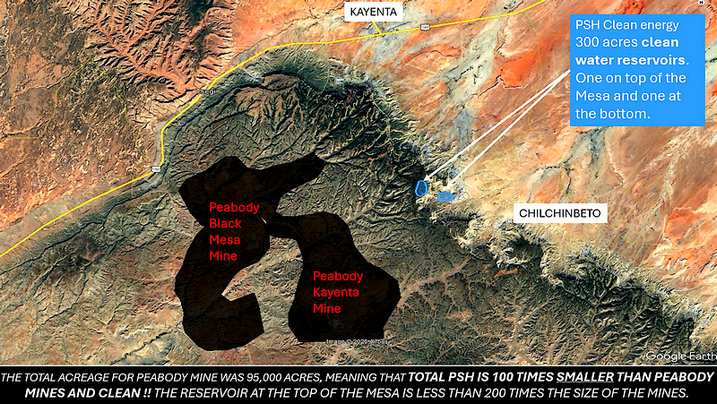
The project is expected to be located on about 400 to 500 acres on top of Black Mesa and about 400 to 500 acres on the base of Black Mesa. A reservoir covering 300 acres is roughly equivalent to half a square mile. As a reference, the Peabody mine complex on top of Black Mesa had a surface area of 95,000 acres, which means that the total PSH project is 100 times smaller than the Peabody mine complex and about 200 times smaller if considering only the reservoir on top of the Mesa, and PSH is clean water in a closed loop and not coal extraction.
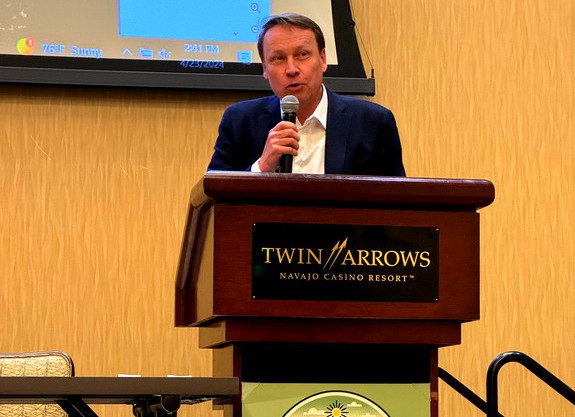
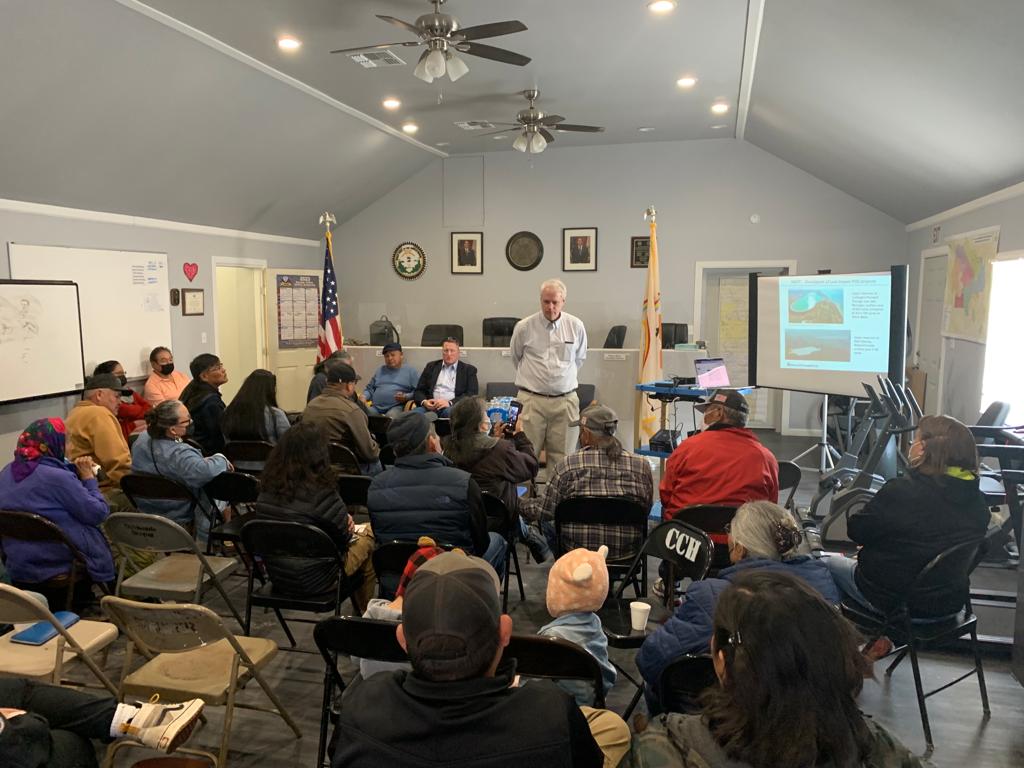
Since the closure of the Navajo Generating Station was announced and Nature and People First recognized the opportunity for a pumped storage hydropower project, Nature and People First has met and made presentations to Navajo Nation leaders, Chapter leaders and members and people located in and near the project area. Among the Navajo Nation organizations with whom Nature and People have visited are:
Regional utilities have expressed interest in potentially purchasing services from the project and requested that the project begin the permitting process by applying for a Federal Energy Commission (FERC) Preliminary Permit. Navajo Nation leadership were contacted for input and authorization to apply for a FERC Preliminary Permit, then Nature and People First applied for a permit on Black Mesa on a wide area to give as many options as possible for the Navajo Nation, Chapters and local people as well as flexibility for such considerations as geology, biodiversity and cultural artifacts. As a result, the surface area specified in the Preliminary Permit Application for the project:
The water for the project will be sourced from the extensive C Aquifer. The C Aquifer has a capacity of 400 million acre-feet (about 356 trillion gallons). This aquifer spans well beyond the Navajo Nation's borders, covering an area exceeding 27,000 square miles. It is not exclusive to the Navajo Nation, but the majority is under the Navajo Nation. The C Aquifer has an annual recharge of approximately 290,000 acre-feet per year (258 million gallons). The total annual pumping from the C Aquifer amounts to 140,000 acre-feet per year which is less than half of the yearly recharge. Only 1% of the annual pumping occurs within the Navajo Nation, while 99% of this annual pumping is conducted off the reservation primarily along the I-40 corridor between St. Johns and Winslow for industrial use, particularly by three CO2-emitting power plants, which account for the majority of pumping, followed by municipal demands in Flagstaff, Winslow, and Holbrook. About 60% of Flagstaff water comes from the C Aquifer, and 100% of Winslow and Holbrook water.
The Chilchinbeto Pumped Storage Hydropower project will necessitate 10,000 acre-feet of water to operate and will be filled over a two-year period. The pumping capacity will be 5,000 acre-feet per year, with a maximum of half of this capacity required thereafter to address evaporation, i.e., 2,500 acre-feet per year, or 1,500 acre-feet per year if the project limits evaporation (for example with floating solar panels). The project plans to allocate the excess pumping capacity to the Navajo Nation and the community at cost for grazing, farming, or other needs.
PSH yearly pumping to compensate for evaporation will account for about 1% of the total annual C Aquifer pumping and 0.5% of the annual C Aquifer recharge. The extracted water from the C Aquifer remains marginal in comparison to the aquifer's capacity, existing annual pumping, and its annual recharge. With evaporation and seepage mitigation and assuming no additional recharge, the total project demand in 100 years would represent a maximum of 0.048% of the total estimate of groundwater stored in the C Aquifer
Additionally, since “water use creates water rights”, the PSH project will help reinforce the Navajo Nation natural rights on the C Aquifer since more than 50% of the C Aquifer is under the Navajo Nation, but only 1% of the yearly C Aquifer pumping is for use on the Nation today.
The Chilchinbeto Chapter has voted to support the Chilchinbeto Pumped Storage Hydropower Project to bring jobs and economic development to our Chapter and people. The project is anticipated to bring in directly or indirectly 1,000 jobs during construction and 100 permanent jobs. For Chapter members living on Black Mesa, the project will improve the road to the top of Black Mesa which is frequently impassable. During a recent winter, a snowmobile was rented to bring a Chilchinbeto member food and medicine. The project will also bring water on top of the Mesa that can help with grazing, farming, wildlife, or other needs for the community there.
The project plans to allocate the excess pumping capacity after the first two years of operation to all Chapter members for grazing, while also supporting biodiversity and providing water for wildlife during periods of drought, particularly on top of the Mesa. The Project will cover the operating expenses associated with this use. The Chapter members living on Black Mesa will no longer have to drive several hours several times a week ... and only when the road is available ... to haul water, which is exhausting, expensive, and highly polluting! The Project will also improve the existing access road to the site at the top of the mesa, making it accessible year-round and benefiting the community that lives in the area.
The project will also make water available for emergency wildfire response when needed, in a context where wildfires are expected to increase in frequency and intensity as a result of climate change. The water allocated for wildfire emergencies would allow the world’s most widely used firefighting helicopter to operate for seven hours a day for more than 150 days per year. Together with the water made available for wildlife whose survival is threatened during increasingly frequent and prolonged droughts, this application will help the Navajo Nation begin adapting to the impacts of climate change.
The project will make water available to all Chapter members. Once the project is complete, most of the project's water infrastructure will be available for the Chapter and the Nation. The Chapter members living on Black Mesa will no longer have to drive 2 hours ... and only when the road is available ... to get water. The direct benefits of the road and water will come from the use of only about 400 to 500 acres on the mesa and 400 to 500 acres at the base of the mesa - less than the grazing area for four cows. It is important to note that currently, no grazing occurs on top of the Mesa. Therefore, the 400 to 500 acres on top of the Mesa will not have any impact on grazing.
Importantly, the project follows the Diné teaching of ‘T’áá hwó’ ajít’éego’ self reliance or self determination. As President Nygren has said, “The Navajo Nation has always been an energy Nation, hands down. We don’t live next to Phoenix. We don’t live next to metropolitan areas. But what we do have is what we’ve always had, energy. Whether it’s oil and gas, whether it’s coal, solar, no other tribe can even match us.”
Former President Jonathan Nez and former Vice President Myron Lizer signed the Navajo Sunrise (Háyoolkáál) Proclamation. President Nez said the proclamation “creates a new economic vision for the Navajo people through healing the land, fostering clean energy development and providing leadership for the energy market.” He went on to say, “This is nothing new to us as indigenous peoples — being stewards of the land and using what Creator has given us in terms of natural resources.” “It’s time for our land to heal and become green again,” said Nez, "What we’re doing today is planting a seed for our future and for our younger generation”. Chilchinbeto Chapter has voted to support this type of clean energy hydro-electric storage project because it brings: jobs, water and economic development.
With the economic development, the project can bring benefits to the Nation, the Chapter, and the local people such as help with:









Signed by
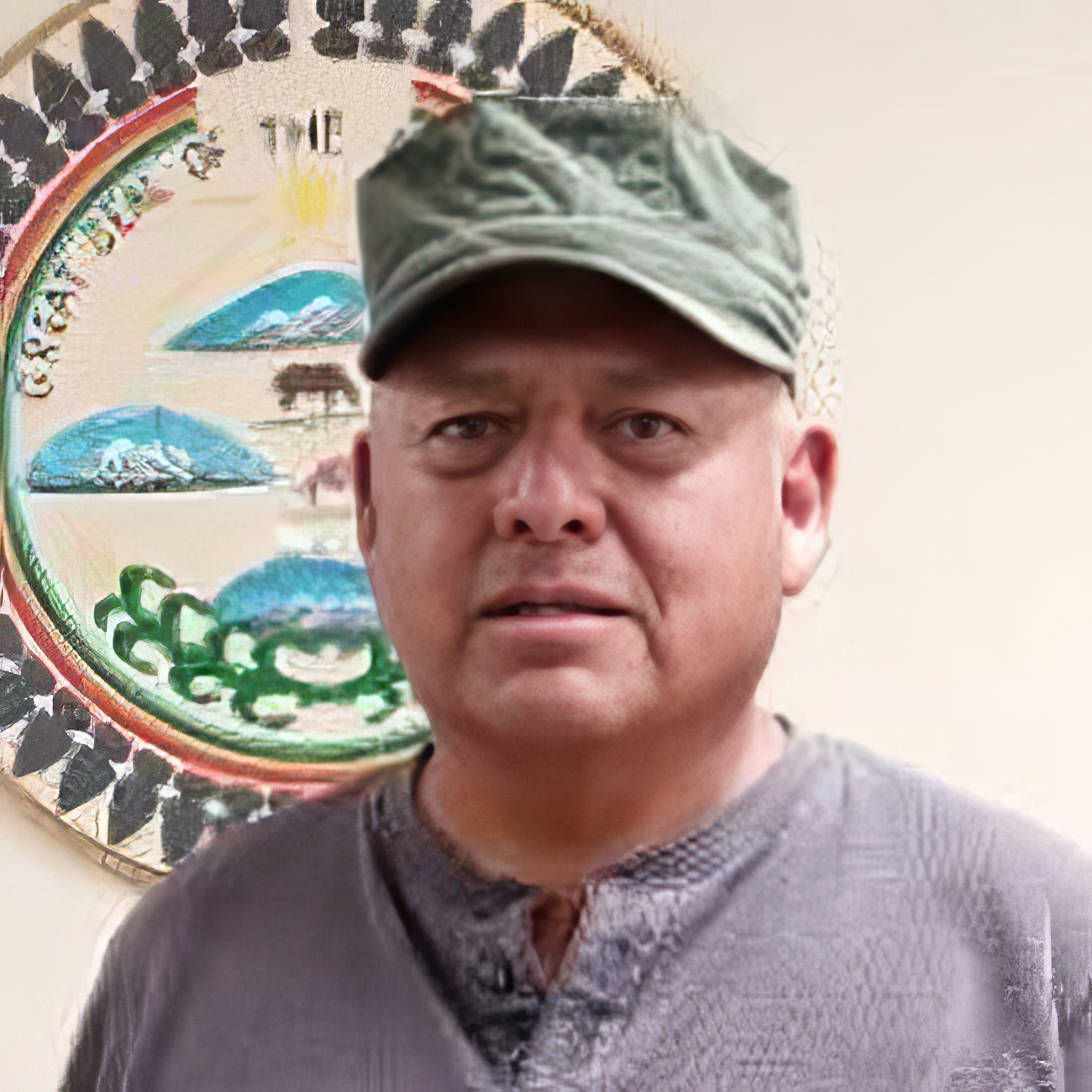 Paul Madson
President
Paul Madson
President
 Thomas Bradley
Vice President
Thomas Bradley
Vice President
 Virginia White
Secretary/Treasurer
Virginia White
Secretary/Treasurer
 Eugene Badonie
Chapter Manager
Eugene Badonie
Chapter Manager
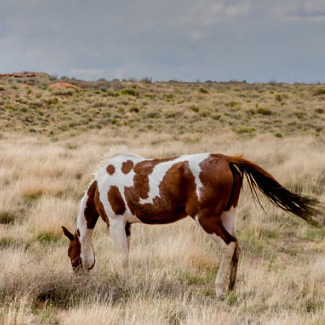 Delbert Big
Grazing Official
Delbert Big
Grazing Official
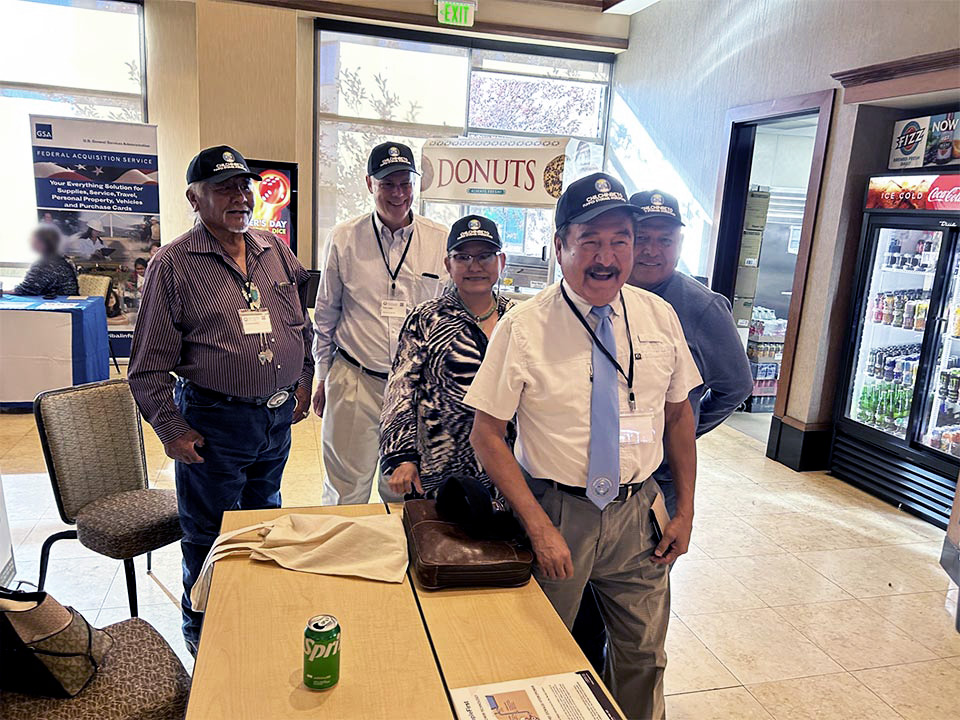
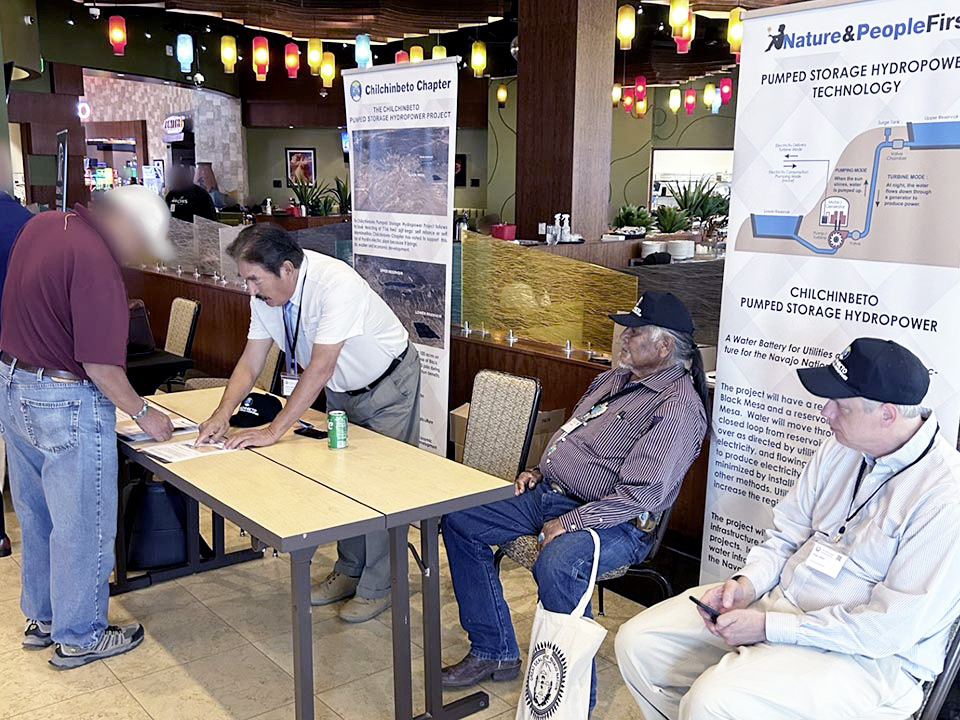
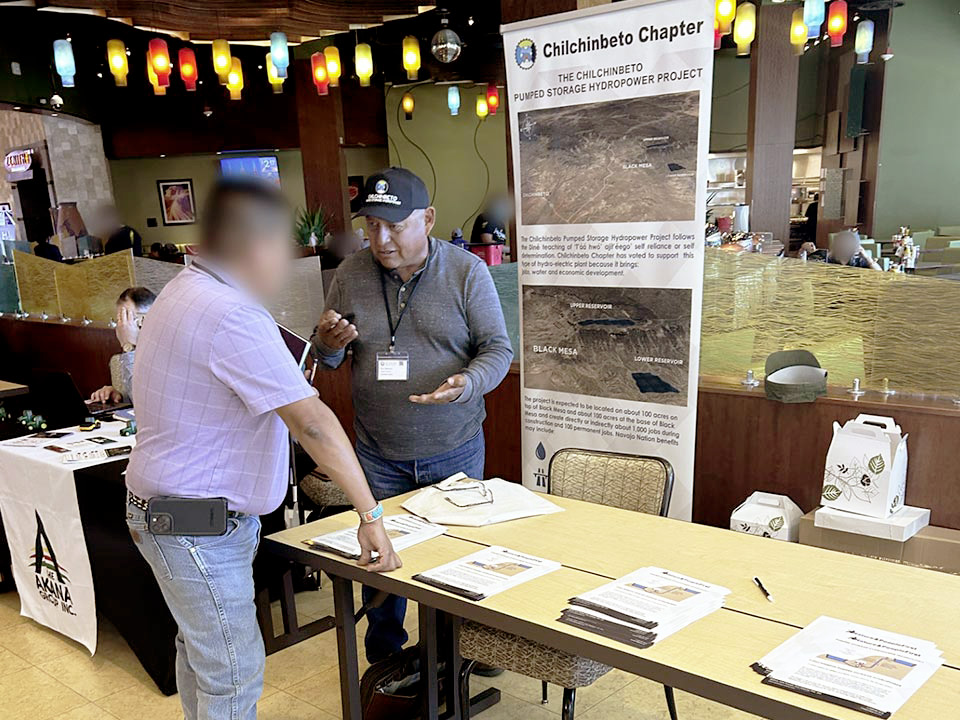
The team has combined over 50 years of energy project development experience, sold services to over a dozen utilities and financed over $1 billion of projects. The team, led by Denis Payre, has the proven ability to turn ideas into thriving companies.
 Denis Payre
Proven Serial Entrepreneur
Denis Payre
Proven Serial Entrepreneur
 Peter Wallis
Proven Ability to Win Utility Awards
Peter Wallis
Proven Ability to Win Utility Awards
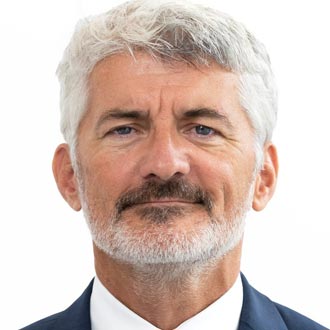 Guillaume Faure
Proven Ability to Develop and Finance Projects
Guillaume Faure
Proven Ability to Develop and Finance Projects
 Eric Van Loon
Top Lawyer with a Long-Term Relationship with the Navajo Nation
Eric Van Loon
Top Lawyer with a Long-Term Relationship with the Navajo Nation

Nature and People First America, LLC
405 Waltham Street
Lexington, MA 02421